
What NVIDIA GTC 2025 Revealed About AI's Next Stage
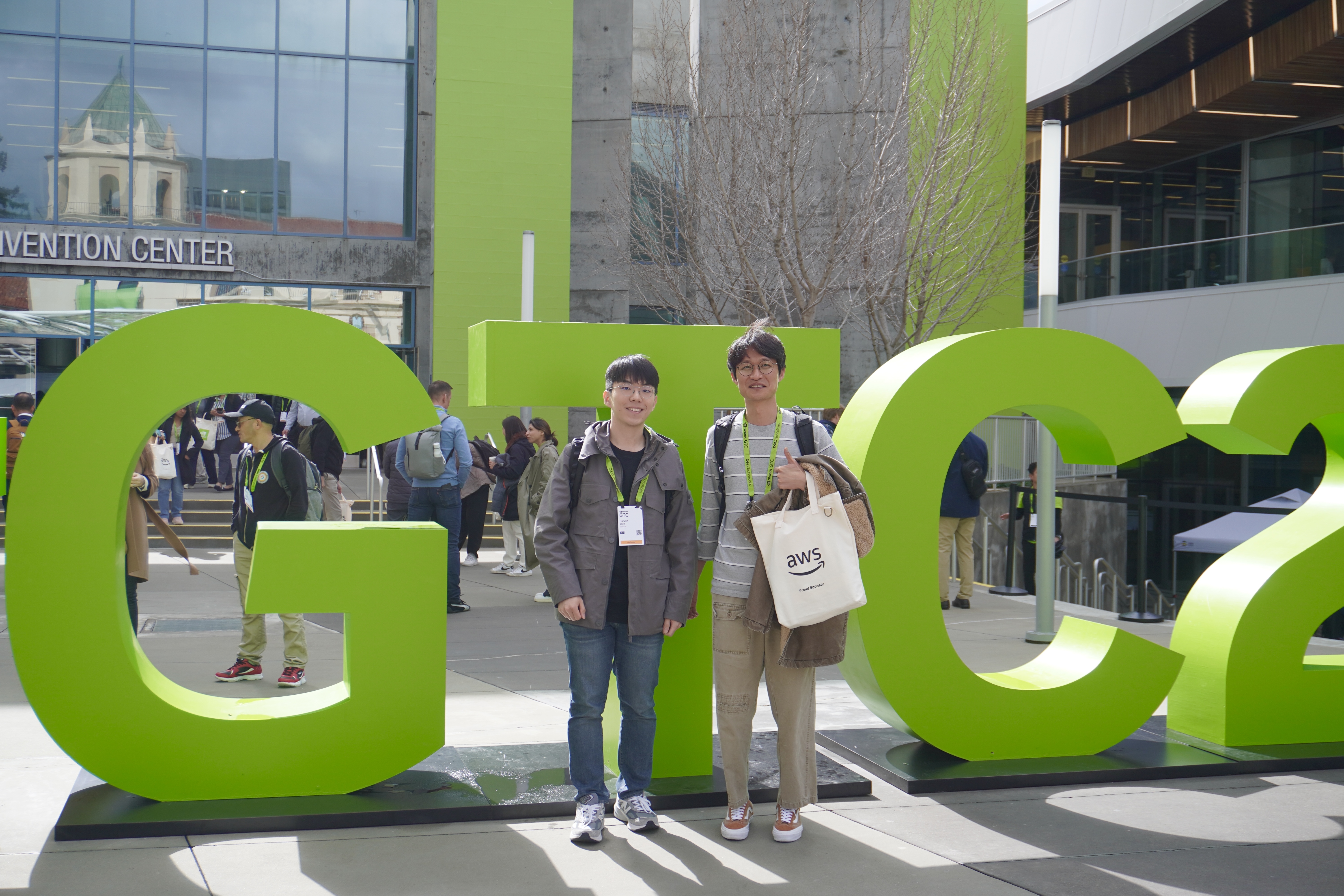
In March 2025, I traveled to San Jose for NVIDIA GTC 2025. I arrived mainly hoping to see new technology firsthand and meet people working on it. After several days of sessions and conversations, however, one point had become much clearer: change in AI was no longer confined to model performance. It was spreading across infrastructure, products, and the physical world.
Where AI research meets operations
GTC offered more than 900 sessions across generative AI, autonomous systems, robotics, and quantum computing. Following everything was impossible. I focused on the topics closest to my work at Hereby: LLM inference, document processing, and agent workflows.
What impressed me most was not the scale of the presentations but the density of the conversations. Researchers and engineers I knew only through papers and GitHub were in the same place, and discussions after sessions often surfaced the failures and operational constraints that did not fit on stage. Many teams were confronting the same gap between an impressive demo and a service people could rely on.
Reading the direction in the keynote
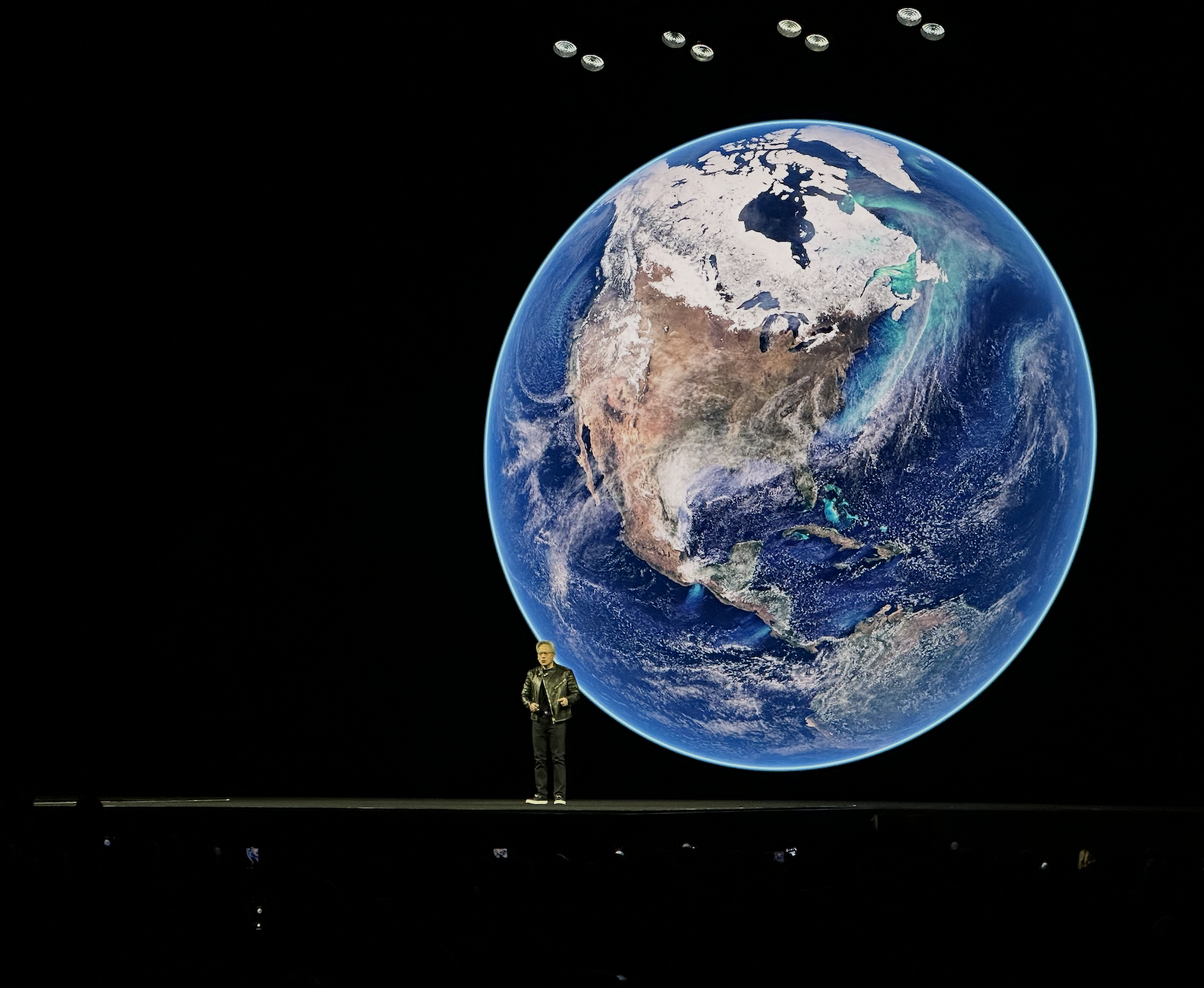
Jensen Huang’s keynote was less a collection of product announcements than a roadmap for AI computing as a whole. The clearest message was that reasoning systems and agents would drive sharply higher demand for computation. Once a model begins planning, using tools, and iterating through multiple steps, the workload grows far beyond generating a single response.
NVIDIA’s emphasis on an annual cadence across GPUs, CPUs, and networking belonged to the same story. The roadmap toward Vera Rubin also meant that the foundation beneath application teams would keep moving. It was no longer enough to evaluate one accelerator in isolation; models, serving software, networking, memory, and power efficiency had to be understood as one system.
The attention given to optical networking and storage was equally memorable. As AI systems scale, bottlenecks increasingly emerge in data movement, memory, and energy rather than raw compute alone. Infrastructure behind the model determines the cost and latency users eventually experience.
Physical AI, centered on Isaac and Cosmos, formed another major theme. AI was moving beyond text and images on a screen toward systems that perceive and act through robots and industrial machinery. Many problems remain unresolved, but the direction—combining simulation, training, and robotics into a broader ecosystem—was hard to miss.
Sessions through a product builder’s eyes
In sessions on agentic AI, I was more interested in failure handling than in planning itself. When should a multistep task be retried? How should an agent respond to an ambiguous instruction? How can tool output be verified? These details determined product quality. An agent was not merely a model that gave a good answer; it was a system making a sequence of decisions in an imperfect environment.
The vLLM and TensorRT-LLM sessions mapped directly to Hereby’s inference infrastructure. Higher throughput can increase per-request latency, while memory use and batching strategies turn directly into operating cost. Benchmark scores do not explain the quality of a production service. Stable responses, predictable latency, and sustainable cost may matter more.
I also followed the document AI and multimodal sessions closely. Contracts contain tables, signatures, annotations, and page structure in addition to text. Passing raw OCR output into an LLM is not enough. A production pipeline must preserve structure and make extraction results verifiable. The progress in multimodal models was encouraging, but reliability still had to be designed at the system level.
What I learned between sessions
Some of the most useful lessons came in the corridors. I spoke with researchers at AI labs, founders building early products, and engineers deploying models in enterprise environments. Their work differed, but the same operational problems kept returning.
Models improve quickly; products do not become complete automatically. Teams still have to handle edge cases, explain why an output changed, and verify that a model upgrade did not break existing behavior. In some settings, predictable cost and latency mattered more than a small gain in model quality. The distance between research and production was shrinking, but it was still real.
Questions that sharpened Hereby
Another purpose of the trip was to explain Hereby, the AI contract-management platform we were building, and seek outside feedback. The idea—using OCR, LLMs, and agents to help review and manage contracts—was easy for people to understand. Contract work is slow and repetitive across industries.
The skeptical questions were more valuable than the positive reactions. How would a user discover an incorrectly extracted clause? Which result should be trusted if two model runs disagreed? Where would sensitive contract data be processed? Could inference costs remain sustainable as usage grew? These were not always visible in a demo, but no real product could avoid them.
The conversations also surfaced use cases we had underestimated. Every industry experiences contract friction differently, and a secondary feature for one user may be essential for another. Explaining the product became a way not only to share what we knew, but also to discover problems we had not yet defined.
Reorganizing my knowledge through certification
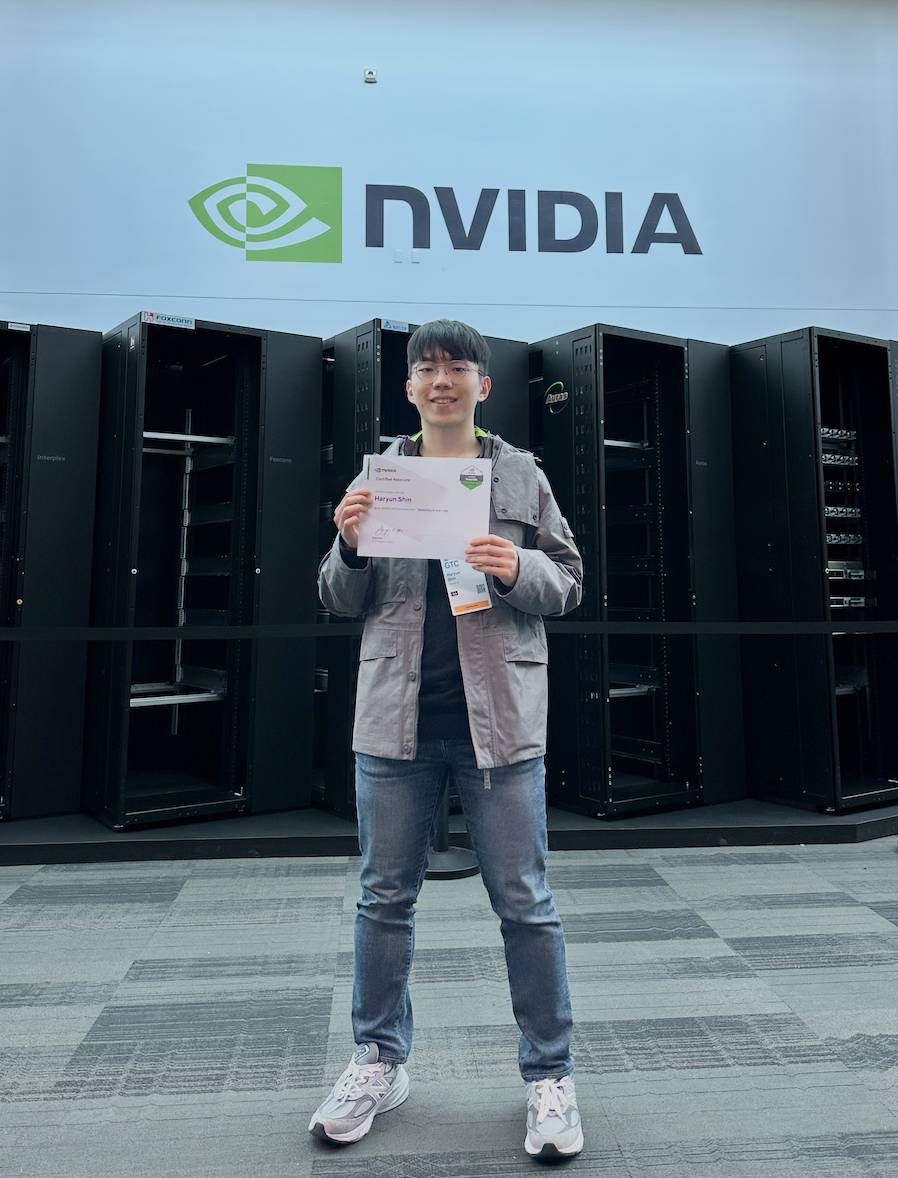
While at GTC, I took the NVIDIA-Certified Associate: Generative AI LLMs exam. Its scope ranged from transformer fundamentals and pretraining to fine-tuning, RLHF, inference optimization, responsible AI, and deployment. It helped connect topics I had encountered separately in practice and exposed areas I recognized but could not yet explain precisely.
I passed. The result was gratifying, but the more valuable part was using the preparation to assess both my knowledge and its gaps.
Coming home
The lesson I brought back was not simply that AI was advancing quickly. Models, hardware, inference infrastructure, and product design were pushing one another forward. Access to capable foundation models was becoming easier, but turning them into dependable products remained difficult—and the standard was rising.
Agents will take on longer tasks, and multimodal models will process more complex documents. That makes verification, bounded failure, and cost control even more important. The competitive advantage of an AI product does not end with adopting the newest model first. It comes from understanding a real user problem and repeatedly converting technical possibility into something that can be operated with confidence.
I returned to Korea with a longer list of things to build than I had when I left. I also felt more certain that the problem we were tackling was difficult enough to be worth pursuing. My most practical conclusion from the frontier was this: there is still a wide gap between demonstrating what is possible and making it trustworthy, and good products are built by closing that gap.